
Why RAM Prices Are Rising in Bangladesh (2026)

RAM price in Bangladesh has more than doubled since late 2025, and the gap between what buyers paid last year and what they pay now is still wide. In November 2026, a 16GB DDR5 desktop module at Creatus Computer typically costs between ৳27,000 and ৳35,000, while an 8GB DDR4 stick across Bangladeshi retailers sits around ৳7,300 to ৳8,700. Those numbers surprise anyone who last upgraded a PC in early 2025.
The increase is not a local pricing quirk. It comes from a global memory shortage that reached Bangladesh through imports, exchange rates and shipping costs at the same time. This guide explains what actually pushed prices up, what common RAM capacities cost today, whether prices are likely to fall, and how to avoid overpaying if you need memory right now.
Why RAM Prices Are Rising in Bangladesh
Five pressures are stacking on top of each other, and Bangladesh feels all of them because it imports nearly every memory module it sells.
Memory makers are serving AI data centres first
Samsung, SK Hynix and Micron have moved a large share of their capacity toward server memory and high-bandwidth memory for AI infrastructure. That leaves less supply for the DRAM used in ordinary PCs and laptops. TrendForce reported that PC DRAM contract prices rose roughly 90 to 95 percent quarter over quarter in the first quarter of 2026, which is the figure retailers everywhere are still working through.
Local prices reacted faster than most buyers expected
The Financial Express reported in April 2026 that some 16GB DDR5 modules in Dhaka had gone from about ৳7,800 to over ৳28,500 within months. Shops that restocked at the new import cost could not hold the old price, and the same pattern showed up in motherboards and SSDs.
The shift to DDR5 removed the cheap fallback
Current Intel and AMD desktop platforms such as Arrow Lake and Ryzen 9000 accept only DDR5. As more buyers moved to those platforms, DDR5 demand climbed while manufacturing remained tight, making the newer standard the most expensive to buy.
Imports, duties and the dollar add a second layer
RAM is priced in US dollars. When the taka weakens, landed costs rise even if the global price stays flat, and customs duty and VAT are then calculated on that higher base. A shipment that costs more at the port also costs more at the shelf.
Shipping and stock cycles slow the correction
Most modules arrive through regional hubs, so any delay or restocking gap shows up as thin stock in Dhaka. When a popular 16GB or 32GB kit runs low, the remaining units tend to sell at the higher price until a new batch lands.
RAM Price in Bangladesh Today (November 2026)
Desktop DDR5 16GB is now the most searched and most expensive mainstream option, at roughly ৳26,500 to ৳35,000 depending on brand, speed and heatsink. DDR4 remains far cheaper per module.
These are listing ranges, not a fixed price list. Premium kits with low latency, RGB or higher speeds can sit above the top of each range, and prices move with stock. Always confirm the live price on the product page before ordering.
One point confuses many buyers: global contract prices and shop prices do not move on the same day. TrendForce noted in its October 2026 data that PC DRAM contract prices were still rising in the fourth quarter, although the gains were narrowing. A shop price you see today reflects stock bought weeks or months earlier.
DDR4 vs DDR5: The Price Gap Matters More Than the Speed Gap
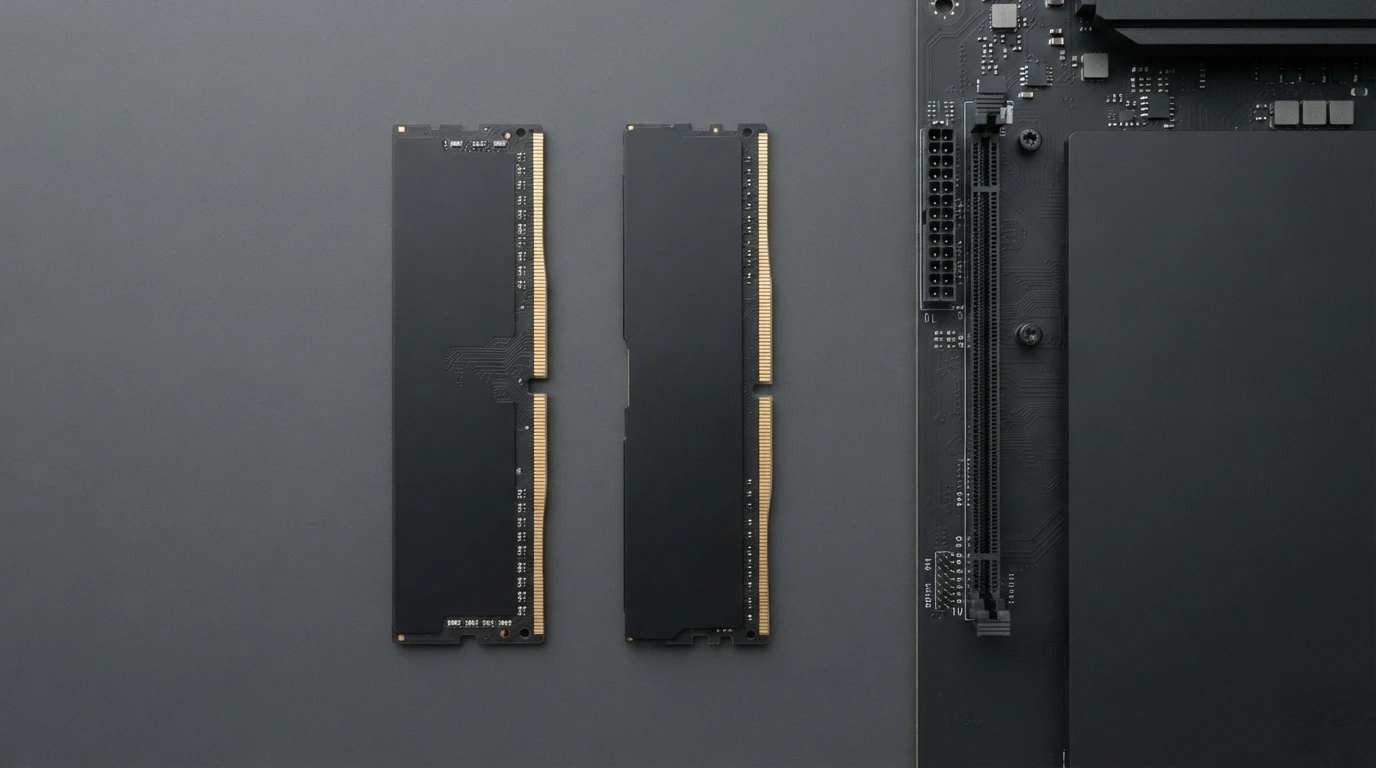
On the ranges above, DDR4 costs about ৳900 to ৳1,100 per gigabyte, while DDR5 costs about ৳1,650 to ৳2,200 per gigabyte. That is close to double the cost for the same capacity, and the real-world speed difference in everyday work is small.
The two types also cannot be swapped. A DDR4 module will not fit a DDR5 slot, so the choice is made by your motherboard, not by your budget. AMD Ryzen 5000 systems use DDR4, current Intel and AMD platforms such as Arrow Lake and Ryzen 9000 need DDR5, and some Intel 12th and 13th Gen boards support either one. Check the board specification first.
If you already own a DDR4 platform, adding more DDR4 is almost always the cheaper way to fix a slow PC than rebuilding around DDR5.
Who Feels the Price Rise Most
Gamers and PC builders see it first, because a 32GB DDR5 kit now costs as much as a capable mid-range graphics card. Many builders are choosing 16GB instead of 32GB, or staying on DDR4 platforms for another year.
Freelancers, video editors and developers need 32GB or more for heavy projects, so their workstation budgets have grown the most. Small offices face the same problem when they refresh several computers at once. Students and everyday users are affected mainly through laptops, since memory is a component cost in every new device. Industry voices quoted by the Financial Express warned that higher memory prices could slow digital expansion across the wider ICT sector.
Will RAM Prices Come Down?
A sharp fall is unlikely before 2027, and most analysts expect memory to stay expensive for longer than that. TrendForce described consumer DRAM supply as still tight in late October 2026, with contract price gains slowing to flat or slightly higher because buyers are cutting back at current prices. Slower increases are not the same as falling prices.
Local commentators are more cautious still. Most trusted sources says a significant drop in 2026 is unlikely and points to expert expectations of high prices until at least 2028 unless AI demand slows sharply. The practical reading is simple: if you need RAM for work or a build, waiting for a big discount carries more risk than buying a sensible capacity now.
How to Buy RAM Smartly Right Now
You cannot change global memory prices, but you can avoid paying for the wrong module.
- Check your motherboard or laptop specifications for the DDR generation, maximum capacity, supported speed and free slot count before looking at prices.
- Match the form factor. Desktop modules (UDIMM) and laptop modules (SO-DIMM) are physically different and cannot be swapped.
- Stay on DDR4 if your platform supports it. At current prices, the savings over DDR5 are large.
- Choose the capacity you actually use. 16GB covers browsing, office work and most gaming. Move to 32GB only for editing, virtual machines or heavy multitasking.
- Prefer a matched dual-channel kit, for example 2 × 8GB, when your board supports it, because it usually gives better memory bandwidth than a single stick.
- Compare capacity, speed, latency and warranty together. A slightly cheaper module with a shorter warranty is not a real saving.
- Leave a slot free where possible, so a later upgrade means adding a stick instead of replacing one.
- Buy from a seller that gives warranty support, and test the new memory soon after installing it so a faulty module can be replaced within the return window.
- Be careful with used RAM. It can suit a secondary PC or home server, but avoid it in a machine you depend on for work.
You can compare current options in the Creatus DDR5 RAM and DDR5 16GB RAM categories.
FAQs
Why are RAM prices increasing in Bangladesh?
Global memory makers are prioritising AI and server memory, which tightens supply for PC RAM. Bangladesh imports almost all its modules, so exchange rates, duties and shipping costs push local prices up further.
How much does 16GB DDR5 RAM cost in Bangladesh in 2026?
In November 2026, desktop 16GB DDR5 modules mostly sell between ৳26,500 and ৳35,000, depending on brand, speed and heatsink design.
Is DDR4 still worth buying?
Yes, if your motherboard supports it. DDR4 costs roughly half as much per gigabyte, and it is enough for most office, study and gaming use.
Does the taka exchange rate affect RAM prices?
Yes. RAM is priced in US dollars, so a weaker taka raises the import cost even when the global price does not change.
Will RAM prices fall soon?
Not in the short term. Contract price increases are slowing, but supply stays tight, and several analysts expect high prices to continue into 2027 and beyond.
Should I buy now or wait?
If you need the memory for work or a build, buy the capacity you need now. Waiting for a large drop is a gamble, especially for DDR5.
Final Word
RAM prices in Bangladesh reflect global demand, tight supply, import costs and the move from DDR4 to DDR5. The safest approach is to check compatibility, buy only the capacity you need and choose a seller that stands behind the warranty.

Leave a Comment