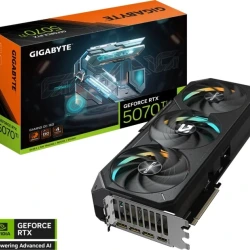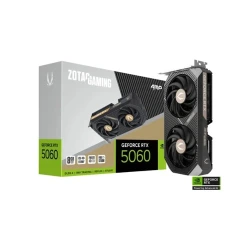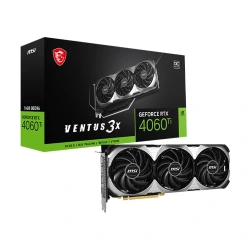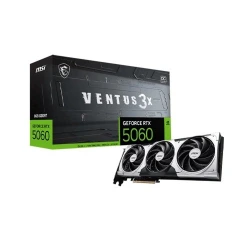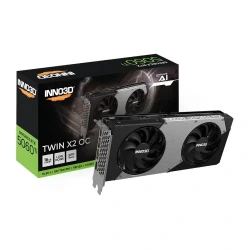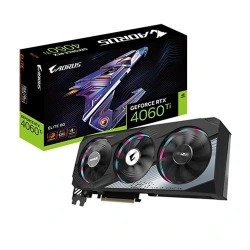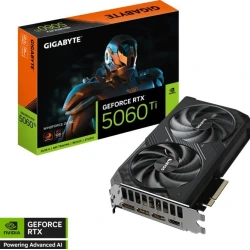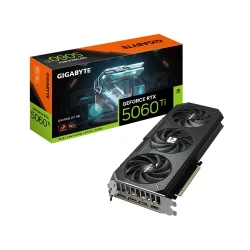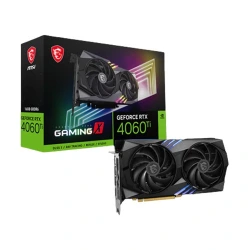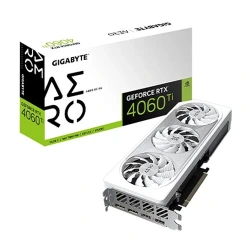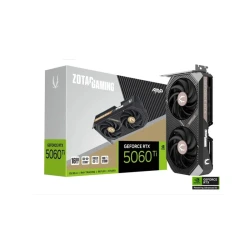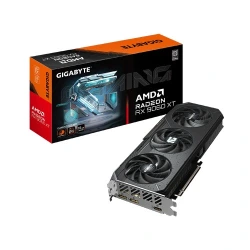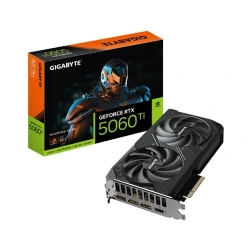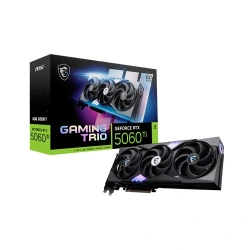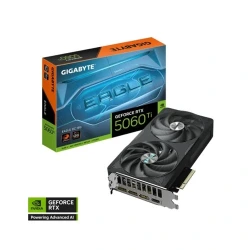

Graphics Card
Graphics Card
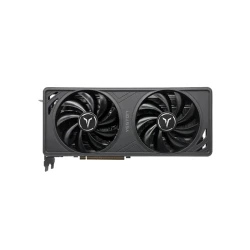
- Powered by Radeon RX 9060 XT
- Integrated with 8GB GDDR6 128bit memory interface
- Boost Clock: up to 3320 MHz (Reference card: 3130 MHz)
- DisplayPort 2.1a x2
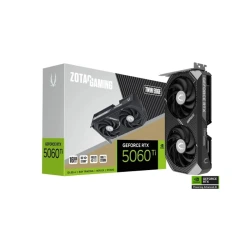
- Powered by NVIDIA Blackwell & DLSS 4
- 8GB GDDR7 with 128-bit interface
- Supports 4K 480Hz & 8K 165Hz output
- Compact SFF design with BladeLink fans
- Boost Clock: 2610 MHz
- Memory Speed: 18 Gbps
- Memory Bus: 128-bit
- Interface: PCI Express Gen 4
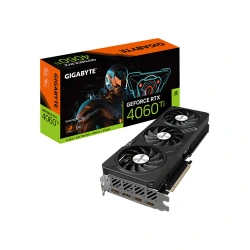
- 8GB GDDR7 ultra-fast memory
- Boost Clock up to 2550 MHz
- Triple TORX 4.0 fan cooling
- Supports 4K 480Hz & 8K 120Hz output
- 16GB 128-Bit GDDR7
- PCI Express 5.0
- 4608 Cores CUDA Cores
- 1 x HDMI 2.1b 3 x DisplayPort 2.1a
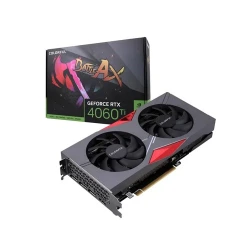
- Core clock: 2580 MHz (Reference Card: 2535 MHz)
- Memory Clock: 18 Gbps
- CUDA Cores: 4352
- Output: DisplayPort x2, HDMI x2
- Memory Clock: 18Gbps
- Memory Bandwidth: 288GB/s
- Output Ports: 3x DisplayPort, 1x HDMI
- Core Clock: Base:2310Mhz; Boost:2535Mhz
- Core clock: 2580 MHz
- Memory Clock: 18 Gbps
- CUDA Cores: 4352
- Output: DisplayPort x2, HDMI x2
- Core Clock: 2407MHz/boost 2572MHz
- Memory Speed: 28Gbps
- Bus Interface: PCI-Express 5.0 x16
- Output Interface: 3x DisplayPort, 1x HDMI
- Video Memory: 16GB GDDR7, PCI Express Gen 5
- Base Clock: 2235MHz, Boost Clock: 2602MHz
- CUDA Cores: 4608, Memory Clock: 28 Gbps
- Display Outputs: 3 x DisplayPort 2.1b, 1 x HDMI 2.1b
- Core clock: 2655 MHz
- Memory Clock: 18 Gbps
- CUDA Cores: 4352
- Output: DisplayPort x2, HDMI x2
- GeForce RTX 5060 Ti with 4608 CUDA Cores and 2587 MHz Core Clock
- 8GB GDDR7 Memory with 28 Gbps Memory Clock and 128-bit Memory Bus
- PCI-E 5.0 interface, 8 Pin power connector, requires 650W PSU
- Outputs: 3x DisplayPort 2.1b and 1x HDMI 2.1b, supports up to 7680x4320 resolution
- Boosted 2647 MHz core clock speed
- 8GB ultra-fast GDDR7 memory
- PCIe 5.0 interface support
- 4-display 8K resolution output
- Memory: 16GB GDDR6
- Memory Clock: 18 Gbps
- CUDA Cores: 4352 Units
- Power Consumption: 165 W
- Core clock: 2580 MHz
- Memory Clock: 18 Gbps
- CUDA Cores: 4352
- Output: DisplayPort x2, HDMI x2
- PCI Express 5.0
- 16GB 128-Bit GDDR7
- 4608 Cores CUDA Cores
- 1 x HDMI 2.1b 3 x DisplayPort 2.1a
- Boost Clock up to 3320 MHz
- 16GB GDDR6 with 20 Gbps speed
- PCI-E 5.0 interface for high bandwidth
- Supports 8K resolution at 7680 x 4320
- CUDA Cores: 4,608
- Core Clock: 2,587 MHz (OC)
- Memory Clock: 28 Gbps
- Bus Interface: PCI Express 5.0 x16
- 8GB GDDR7 ultra-fast memory
- Boost clock up to 2662 MHz
- Triple DisplayPort + HDMI 2.1b
- TRI FROZR 3 advanced cooling system
- Video Memory: 16GB GDDR7, PCI Express 5.0
- Core Clock: 2617 MHz (Reference card: 2572 MHz)
- CUDA Cores: 4608, Memory Clock: 28 Gbps
- Display Outputs: 3 x DisplayPort 2.1b, 1 x HDMI 2.1b
GPU Price in BD – Buy Original Graphics Cards at Creatus Computer
A graphics card (GPU) is the component that draws everything you see on screen, from game frames and video timelines to 3D renders and AI workloads. If you are checking the latest GPU price in BD for a new gaming build, an editing workstation or an upgrade to an older PC, Creatus Computer stocks original NVIDIA GeForce RTX, AMD Radeon and Intel Arc graphics cards from trusted brands. You can compare models by VRAM, chipset and budget in one place.
Because the graphics card price in BD changes often with dollar rates, import costs and new launches, the product listing above always shows the current price and stock status. This guide explains what to look at before you buy, so you pay for the performance you actually need.
Which GPU Chipset Is Right for You: NVIDIA, AMD or Intel?
Every graphics card is built around a chip from one of three companies. Board partners such as MSI, Gigabyte, ASUS, Zotac and Sapphire then add their own cooling, clock speeds and design.
- NVIDIA GeForce RTX: The most popular choice in Bangladesh. RTX cards are strong in ray tracing and support DLSS upscaling. They also work well with creative software and AI tools that use CUDA. Current options include the RTX 50 series alongside the still-popular RTX 40 and RTX 30 cards.
- AMD Radeon RX: Often gives more raw performance and more VRAM for the money. Radeon cards support FSR upscaling and FreeSync. The newer RX 9000 series, including the RX 9060 XT and RX 9070 XT, has improved ray tracing a lot.
- Intel Arc: A value-focused option for budget and mid-range builds. Arc A-series and B-series cards offer generous VRAM and good media encoding. That makes them attractive for 1080p gaming and streaming.
Graphics Card Tiers by Use Case
The easiest way to narrow down the GPU price in BD is to start with what you will use the card for and the monitor resolution you play or work on.
| Tier | Best For | Typical VRAM | Example Series |
|---|---|---|---|
| Entry-level | eSports titles, office multi-display, light editing | 4GB – 8GB | RX 580, Arc A380, RTX 3050 |
| Mainstream | 1080p high settings, streaming, YouTube editing | 8GB – 10GB | RTX 5050, RTX 5060, RTX 4060, Arc B570, RX 9060 XT |
| Upper mid-range | 1440p gaming, 4K video editing, 3D work | 12GB – 16GB | RTX 5070, RTX 5070 Ti, RX 9070 XT, Arc A770 |
| High-end | 4K gaming, heavy rendering, AI and deep learning | 16GB – 24GB+ | RTX 4080, RTX 4090 and above |
You can jump straight to popular series pages such as the RTX 5060 graphics card, the RTX 5070 graphics card or the RX 9070 XT graphics card collection.
Key Specs to Check Before Buying a Graphics Card
1. VRAM (Video Memory)
VRAM holds textures and frame data. 8GB is the practical minimum for modern 1080p gaming. 12GB to 16GB is safer for 1440p, high-resolution textures and video editing. Our 8GB graphics card section is a good starting point for balanced builds.
2. Memory Type and Bus Width
Newer memory types move data faster. GDDR7 is faster than GDDR6X, and GDDR6X is faster than GDDR6. A wider memory bus, such as 192-bit or 256-bit versus 128-bit, also increases bandwidth. Two cards with the same VRAM can therefore perform very differently.
3. Upscaling and Ray Tracing Support
DLSS (NVIDIA), FSR (AMD) and XeSS (Intel) render the game at a lower resolution and then upscale it intelligently. This can raise frame rates a lot. If you want realistic lighting in newer games, check the card's ray tracing capability.
4. Power Requirement (TDP) and PSU
Every GPU lists a recommended PSU wattage and the connectors it needs, such as 8-pin or 12V-2x6. Many GPU problems are actually weak power supply problems. Check the PSU before you buy, and if it is too weak, pair the card with a reliable unit from our power supply range.
5. Card Size and Cooling
Dual and triple-fan cards run cooler and quieter, but they are longer and thicker. Measure the free space in your cabinet first. Heavy cards should be paired with a GPU support bracket to prevent sag over time.
6. Motherboard and Display Compatibility
Modern cards use PCIe 4.0 or 5.0 slots but remain backward compatible with older PCIe versions. Also match the display outputs (HDMI 2.1, DisplayPort) to your monitor. This matters most if you plan to use a high refresh rate gaming monitor.
Popular Graphics Cards at Creatus Computer
Here are some models buyers often shortlist across different budgets:
- PELADN RX 580 8GB Dual Fan Gaming Graphics Card – A budget-friendly way to move up from integrated graphics for eSports and light gaming.
- MSI GeForce RTX 3050 VENTUS 2X 6GB OC – An entry RTX card with DLSS support in a compact dual-fan design.
- ZOTAC GAMING GeForce RTX 5050 SOLO 8GB – A newer-generation RTX card for 1080p gaming in small-form-factor builds.
- SPARKLE Intel Arc B570 Eclipse OC 10GB – Extra VRAM and strong media encoding for gamers who also stream.
- Yeston Radeon RX 9060 XT GAEA 8GB – AMD's latest RDNA 4 architecture with PCIe 5.0 support for modern mainstream gaming.
- Gunnir Intel Arc A770 Tri 16GB – A large 16GB frame buffer for editors and 3D hobbyists on a budget.
Why the GPU Price in BD Keeps Changing
Graphics card prices in Bangladesh depend on the USD exchange rate, import duties, global chip supply and new product launches. When a new generation arrives, older models often get cheaper. Sometimes they sell out instead. Brand editions also affect price: an overclocked triple-fan model costs more than a basic dual-fan version of the same chip. For that reason, it is better to decide on the performance tier first and then compare brands and coolers within that tier.
Building a Complete PC Around Your GPU?
A graphics card performs best in a balanced system. Pair it with a compatible motherboard, enough RAM and a quality PSU. Use our PC Builder tool to check compatibility and plan your full setup. If you prefer a ready system, explore our pre-configured gaming PC builds.
Why Buy Your Graphics Card from Creatus Computer?
- Original, brand-new GPUs from NVIDIA, AMD and Intel board partners
- A wide range from entry-level to flagship, all in one catalog
- Easy filtering by brand, chipset, VRAM and memory type
- Price and stock updated regularly on each product page
- Guidance from our team to help you choose a compatible card
Frequently Asked Questions
What is the GPU price in BD right now?
The GPU price in BD ranges from affordable entry-level cards to premium flagship models. The final price depends on the chipset, VRAM, brand and cooler design. Because prices change with exchange rates and stock, check the listing on this page for the latest graphics card price in BD.
Which graphics card is best for gaming in Bangladesh on a budget?
For budget 1080p gaming, cards like the RTX 3050, RTX 5050, Intel Arc B570 or RX 9060 XT offer good value. If you mainly play eSports titles, an RX 580 or Arc A380 is enough.
How much VRAM do I need in a graphics card?
8GB is the minimum recommended for modern 1080p gaming. 12GB to 16GB is better for 1440p gaming, video editing and 3D work. 16GB or more suits 4K gaming and AI workloads.
Is NVIDIA or AMD better for gaming?
Both are good choices. NVIDIA leads in ray tracing, DLSS and creative-app support. AMD often offers more performance and VRAM for the price. Choose based on your budget, the games you play and the software you use.
What power supply do I need for my graphics card?
Check the recommended PSU wattage on the GPU's product page. Most entry-level cards run fine on a quality 450W–550W PSU. Mid-range cards usually need 600W–750W, and high-end cards may need 850W or more. Always make sure the PSU has the right power connectors.
Will a new graphics card work with my old motherboard?
In most cases, yes. Modern PCIe 4.0 and 5.0 graphics cards are backward compatible with PCIe 3.0 slots. Before buying, confirm that your case has enough space and your power supply can handle the card.