
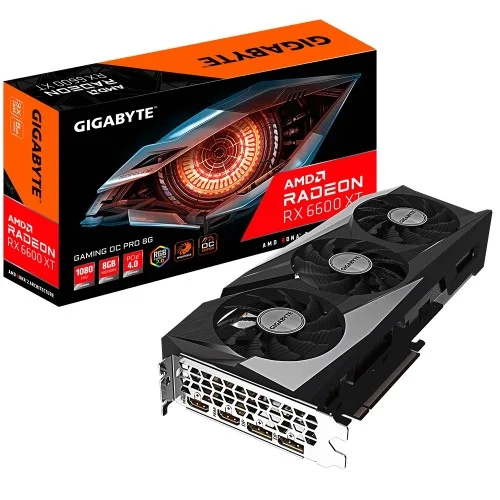
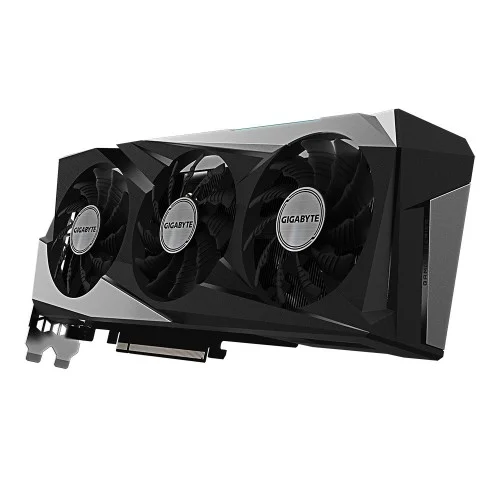
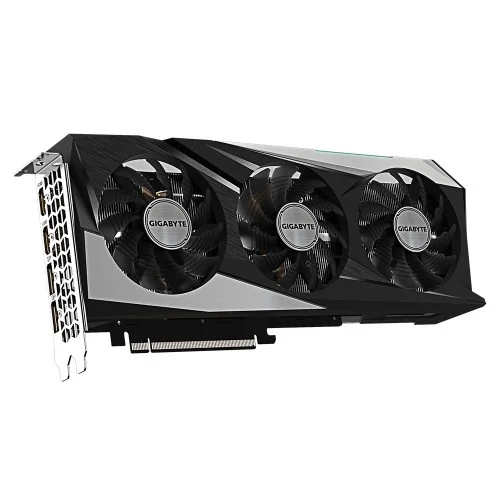
GIGABYTE Radeon RX 6600 Eagle 8G Graphics Card
Out Of Stock


GIGABYTE Radeon RX 6600 Eagle 8G Graphics Card
- Stock: Out Of Stock
- Model: Model-80106
- Product id: 23375
Key Feature
- Memory Size: 8 GB
- Memory Type: GDDR6
- Memory Bandwidth (GB/Sec): 224 GB/S
- Memory Clock: 14000 MHz
- Stream Processors: 1792
Chat Through
Quick Compare
| Product Details | ||||
| Product | GIGABYTE Radeon RX 6600 Eagle 8G Graphics Card | Gigabyte GT 710 2GB DDR3 Graphics Card | OCPC GeForce GT 730 4GB DDR3 Graphics Card | Colorful GeForce GTX 1630 Mini 4GD6-V GDDR6 Graphics Card |
| Image |  |
 |
 |
 |
| Price | |
|
|
|
| Model | Model-80106 | GV-N710D3-2GL | GT 730 | GeForce GTX 1630 Mini 4GD6-V |
| Brand | GIGABYTE | GIGABYTE | OCPC | COLORFUL |
| Availability | Out Of Stock | In Stock | In Stock | In Stock |
| Rating | Based on 0 reviews. |
Based on 0 reviews. |
Based on 2 reviews. |
Based on 1 reviews. |
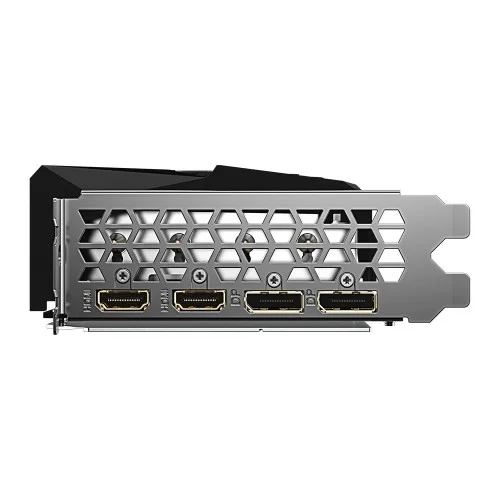
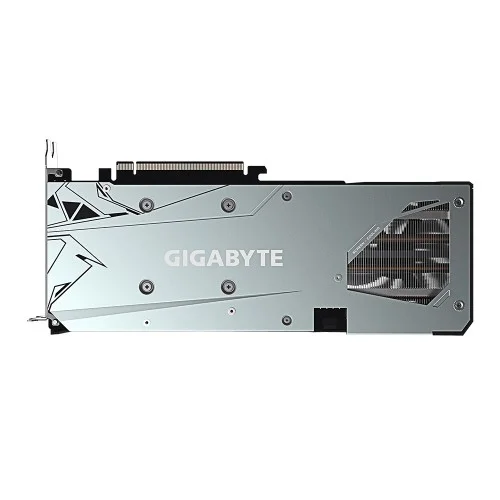
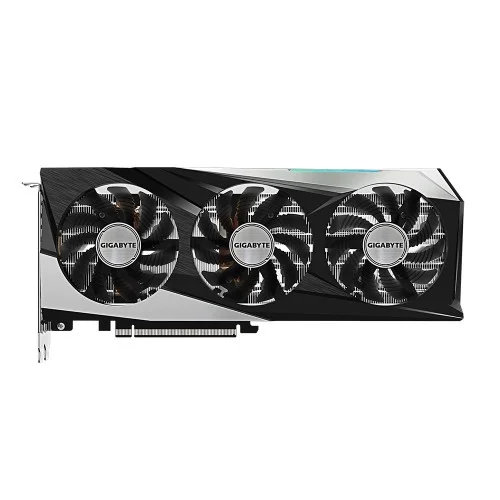
| Summary | GIGABYTE Radeon RX 6600 Eagle 8G Graphics Card Based On The RDNA 2 Architecture And Designed To Handle The Graphical Demands Of 1080p Gaming, The Gigabyte Radeon RX 6600 EAGLE Graphics Card Provides An Immersive Gaming Experience With Your PC Games. The GPU Features 8GB Of GDDR6 VRAM And A 128-Bit Memory Interface, Offering Improved Performance And Power Efficiency Over The Previous RDNA-Based Generation. Radeon RX 6600 Eagle Front Panel Of The Card Features A Variety Of Outputs, Such As DisplayPort 1.4 And HDMI 2.1. HDMI 2.1 Supports Up To 48 Gb/S Bandwidth And A Range Of Higher Resolutions And Refresh Rates, Including 8K @ 60 Fps, 4K @ 120 Fps, And Even Up To 10K. The Radeon RX 6600 Supports APIs Such As DirectX 12 Ultimate And OpenGL. These APIs Can Take Advantage Of The GPU's 1792 Stream Processors To Accelerate Parallel Computing Tasks, Taking Some Of The Processing Load Off Of The CPU. For Cooling, Gigabyte Implemented The WINDFORCE 3X Cooling System. Radeon RX 6600 Eagle Cooling System Uses Three 80mm Fans. The Airflow Is Split By The Triangle Fan Edge And Guided Smoothly Through The 3D Stripe Curve On The Fan Surface. The 3D Active Fan Feature Provides Semi-Passive Cooling, Which Means The Fans Will Remain Off When The GPU Is Under A Set Loading Or Temperature For Low Power Gaming. DirectX 12 Ultimate DirectX 12 Ultimate Gives Game Developers The Power To Deliver Immersive Visuals With Real-Time DirectX Raytracing (DXR), Variable Rate Shading (VRS), Mesh Shaders, And Sampler Feedback, Taking Games To The Next Level. AMD FidelityFX AMD FidelityFX Is An Open-Source Image-Quality Toolkit Comprising Seven Different Solutions Available For Game Developers To Implement Into Their Games That Are Optimized For AMD RDNA And RDNA 2 Architectures. AMD Radeon Image Sharpening Restores Clarity To In-Game Images That Have Been Softened By Other Post-Process Effects. RIS Combines With GPU Upscaling To Provide Sharp Visuals At Fluid Frame Rates On Very High-Resolution Displays, And Works Across DirectX 9, 12, And Vulkan Titles. AMD FreeSync 2 Technology Reduce Screen Tearing With AMD's FreeSync 2 Technology. FreeSync 2 Enables The Monitor To Dynamically Adjust Its Refresh Rate To The Frame Rate Being Output By The Graphics Card, Thereby Greatly Reducing Screen Tearing, Stuttering, And Other Artifacts. Radeon Anti-Lag Optimized For ESports, Radeon Anti-Lag Improves Competitiveness By Decreasing Input-To-Display Response Times By Up To 31 Percent, Delivering An Experience Similar To Higher Frame Rates. AMD Radeon Boost AMD Radeon Boost Dynamically Lowers Resolution Of The Entire Frame When Fast On-Screen Character Motion Is Detected Via User Input, Allowing For Higher FPS With Little Impact To Quality. GIGABYTE Radeon RX 6600 Eagle 8G Review We have with us the Gigabyte Radeon RX 6600 Eagle, a premium custom-design graphics card based on AMD's latest mid-range GPU. The RX 6600 (non-XT) is designed for 1080p gaming with maximum settings, and meets the DirectX 12 Ultimate feature-set. Gigabyte's value-addition comes in the form of a large, premium-looking dual-slot cooling solution. The RX 6600 shares the 7 nm Navi 23 silicon with the RX 6600 XT launched this August, but is slightly cut down to bring down prices. The card could appeal to the e-sports gaming crowd that's playing at 1080p. AMD carved the Radeon RX 6600 Eagle out of the Navi 23 silicon by disabling 4 out of 32 compute units physically present, resulting in 1,792 stream processors, 28 Ray Accelerators, 112 TMUs, and 64 ROPs. The memory size is unchanged at 8 GB, as is the memory type—GDDR6 across a 128-bit wide memory bus. The memory data-rate is lower, at 14 Gbps, compared to 16 Gbps on the Radeon RX 6600 Eagle, resulting in memory bandwidth of 224 GB/s vs. 256 GB/s. AMD's innovation in the memory space with this generation is Infinity Cache, a fast on-die L3 cache memory that cushions data transfers between GPU and memory. For the RX 6600, the same 32 MB Infinity Cache is used as on the Radeon RX 6600 Eagle. The Radeon RX 6600 Eagle is based on the same RDNA2 graphics architecture as the rest of AMD's Radeon RX 6000 series, which has propelled the company back to competitiveness across all consumer graphics market segments, including the enthusiast segment. This is AMD's first architecture that features real-time ray tracing hardware acceleration. Fixed function hardware called Ray Accelerators perform the most compute-intensive part of the ray tracing pipeline (ray intersection calculations), while much of the other ray tracing pipeline is handled by compute shaders. A consequence of this is that AMD has had to significantly increase throughput of its SIMD machinery through not just IPC increases of the RDNA2 compute unit, but also significant increases in engine clocks. This is what makes the RX 6600 an interesting mid-range card for the 1080p crowd. The Radeon RX 6600 Eagle features a large WindForce 3X cooling solution with an aluminium fin-stack heatsink that's fed heat by three copper heat-pipes that make direct contact with the GPU at the base. This heatsink is ventilated by three 100 mm fans. The card is longer than the PCB itself, which means much of the airflow from the third fan goes right through the heatsink and out the backplate from a large cutout. Just like all other RX 6600 cards on the market, the Gigabyte RX 6600 Eagle in this review ticks at AMD reference speeds—no overclocked variants are available at this time. AMD originally designed the RX 6600 to undercut NVIDIA's GeForce RTX 3060 at a lower price. In this review, we find out if the GPU is able to meet that goal with much better cooling. AMD's Radeon RX 6600 Eagle (non-XT) is the smaller brother to the RX 6600 XT launched in August. These cards are targeted at the plethora of 1080p Full HD gamers out there—the "RX 580 and RX 570" equivalent of 2021. Under the hood, the Radeon RX 6600 is powered by the same Navi 23 silicon as the RX 6600 XT. For the non-XT, AMD reduced the core count from 2048 cores to 1792. VRAM remains at 8 GB GDDR6 128-bit; the only surprise here is that memory chips from Hynix are used—this the first time we're seeing GDDR6 from Hynix. AMD also hasn't made any changes to the L3 cache on the GPU, which helps achieve the performance target. On Navi 23, this cache is relatively small with just 32 MB (Navi 22: 96 MB, Navi 21: 128 MB). This is certainly a compromise to reduce the chip's die size and manufacturing cost. On average, across our brand-new 25-game strong test suite, we found the RX 6600 to match the RX 5700 and RTX 2070 exactly at Full HD. Compared to the NVIDIA RTX 3060, RX 6600's direct rival, the NVIDIA card has a tiny 4% lead. The Radeon RX 5700 XT is 10% faster, and the RX 6600 XT is 13% ahead and sits right in the middle of the gap between the RX 6600 and RX 6700 XT. NVIDIA's RTX 3060 Ti is 30% faster than the RX 6600. The aging Vega 64 is 13% behind the RX 6600, just like last-generation's RTX 2060. What's important to point out is that the RX 6600 really is built for 1080p. If you look at our performance results for 1440p and 4K, you'll see that the card falls behind relative to competing cards at those resolutions. The underlying reason is that the L3 cache is relatively small, just big enough for the gaming workloads of 1080p, and cache hit rates go down at higher resolutions. Just like all the other cards available at this time, Gigabyte's Radeon RX 6600 Eagle doesn't come with a factory overclock—a lost opportunity if you ask me. I find it curious that not a single factory overclocked variant of the RX 6600 exists, maybe there's some kind of AMD limitation in play here? If you take into account random variation between test runs, the Gigabyte RX 6600 Eagle achieves exactly the same performance result as the PowerColor RX 6600 Fighter in our launch-day review—as expected given the specifications. Radeon RX 6600 Eagle performance numbers in this review confirm the Radeon RX 6600 as a good choice for playing at the highly popular 1080p Full HD resolution. Nearly all titles in our test suite ran at over 60 FPS at maximum settings. Only Cyberpunk 2077 (52 FPS) and Red Dead Redemption 2 (58 FPS) did not, but were close enough. All these benchmarks were with ray tracing disabled. We also expanded our ray tracing test suite with the new bench, and the RX 6600 really can't deliver here. Framerates are pretty much unplayable across the board as the performance hit from enabling ray tracing is between 30–60%. Competing cards from NVIDIA do much better here, often achieving twice (!) the FPS of the RX 6600. I still think this isn't a big deal. With a card like the RX 6600, enabling ray tracing simply isn't worth it considering the graphics improvement ray tracing brings. In some titles, the RT effects come with a small performance penalty, but only a negligible visual difference that is almost impossible to spot, so much so that you'll wonder "that's what I sacrificed X FPS for?". AMD recently introduced their FSR upscaling technology, which works on all cards, including the NVIDIA and RX 6600, of course. While this could be a mechanism to cushion the performance hit from ray tracing, I'm not convinced it's a trade-off I'm willing to recommend for every single game. Still, FSR can be useful for a few extra FPS with minimal loss in image quality. The Gigabyte Radeon RX 6600 Eagle in this review is the second Radeon RX 6600 card we've tested. The first one was PowerColor's Fighter. Just like the Fighter, the Gigabyte Eagle is clearly designed with cost optimizations in mind. To me it feels like the RX 6600 is the RX 570 of 2021—every dollar counts. What I really like is that Gigabyte included a backplate with their card, even if it's just made from plastic. Actually, the cooling difference between a metal and plastic backplate is almost negligible; it's more about looking more like a complete product, and protecting against damage, of course. The Gigabyte RX 6600 Eagle is also the only triple-fan variant for the RX 6600 XT. Whether there are two or three fans really doesn't make much of a difference here, though. In terms of cooling potential, the card is very similar, only marginally better than the dual-slot PowerColor Fighter as our apples-to-apples heatsink comparison test reveals. Gigabyte prioritized things differently, though. While PowerColor achieved very low noise levels at slightly higher temperature, the Gigabyte Eagle runs a bit cooler, but also louder. With 33 dBA, the card is definitely audible, but clearly not "loud" or "noisy." Considering the incredibly low 65°C, I feel Gigabyte could have allowed slightly higher temperatures, like 70°C, which won't affect longevity or anything else, but achieve better noise levels. It's good to see that idle fan stop has become a mandatory capability nowadays even in this segment—the RX 6600 will shut off its fans in idle, desktop work, and internet browsing. Considering the simple cooler designs, it's surprising how easy the RX 6600 GPU is to cool. The secret sauce is AMD's extremely high energy efficiency. With just 130 W during gaming, the RX 6600 draws very little power, yet offers sufficient punch for 1080p at highest details. This is one of the most energy-efficient graphics cards I ever tested, considerably more efficient than even NVIDIA's Ampere architecture—who would have thought that just a few years ago. The low power draw of the GPU reduces heat output accordingly, which means the cooler can be smaller and run at slower fan speed to achieve a given target temperature... | Gigabyte GT 710 2GBGigabyte GT 710 2GB DDR3 Graphics Card Gigabyte GT 710 2GB DDR3 Graphics Card Powered by NVIDIA GeForce GT 710 GPU Integrated with the first 2048MB DDR3 memory and 64-bit memory interface Core Clock: 954MHz Features Dual-link DVI-D / D-Sub / HDMI Support PCI Express 2.0 x8 bus interface Recommended system power supply requirement: 300W Gigabyte GT 710 2GB DDR3 Review Gigabyte GT 710 easy to physically install. Gigabyte GT 710 instructions failed to mention the BIOS. My monitor did not work at first because when I booted, it was plugged into the new card. I pressed "delete" a few times hoping the computer would open BIOS so i could shut down, plug back into the onboard video card and then enter BIOS to disable the onboard video, and default to the PCIe slot. Once I did that, we were in business. Someone who is not familiar with BIOS might suspect the card does not work...don't forget to change your BIOS when you use onboard video card BEFORE you install the card. Once I got past that hiccup, it was fine. What i do NOT like is these companies now send a card without a CD or installation software and drivers. Not everyone has internet these days Yes hard to believe, But i purchased this for someone who has a home desktop computer, when i installed the card i was stunned that there were NO drivers or installation disk in the box. Companies are getting so cheap. I had to drive home over 40 miles D/L the software place it on a CD drive back to install the software for the card to run. Totally ridiculous. Gigabyte GT 710 card on the other hand works great now that i have it installed., Make sure you install the software that comes with the video card. The windows default software technically works... but it is no good. Use the included software and then check for updates to assure you have the video card running at its best. Installation of software and drivers took forever. Once installed ran machine for about an hour. Next use was online gaming where this crashed and sent me to a black screen after only 10 minutes of online online multiplayer gaming. It has been returned and my older BFG 550 Ti is back in running like a champ. Specification: Graphics Card Memory Size 2 GB Graphics Engine GeForce® GT 710 Core Clock 954 MHz (Standard: 954 MHz) Memory Type DDR3 Card size H=21 L=144 W=68 mm Memory Clock v2.0 1600 MHz II v1.0 1800 MHz II Warranty 2 Years .. | OCPC GeForce GT 730 4GB DDR3 Graphics CardThe OCPC GeForce GT 730 4GB DDR3 Graphics Card is an excellent entry-level GPU designed for everyday computing, multimedia, and light gaming. Featuring 4GB DDR3 memory, it ensures smooth video playback, reliable performance, and support for popular applications. With HDMI, DVI, and VGA outputs, it offers wide compatibility with different monitors and systems. Its compact design makes it ideal for small form factor PCs, while low power consumption ensures efficiency without requiring an external power connector. Perfect for office work, casual gaming, and HD video streaming, the GT 730 is a budget-friendly upgrade for enhanced graphics performance.Main Features of OCPC GeForce GT 7304GB DDR3 memory for reliable performanceHDMI, DVI, and VGA outputs for multi-display supportCompact design suitable for small casesLow power consumption, no extra connector requiredIdeal for everyday tasks and HD video playbackCompatible with major operating systemsSupports DirectX and OpenGL technologiesFeatures and BenefitsSmooth Visuals: 4GB memory ensures better multitasking and video playback.Connectivity Options: HDMI, DVI, and VGA support multiple monitors.Compact Build: Fits easily in small desktops and office PCs.Energy Efficient: Runs without external power, saving energy.Budget-Friendly: Affordable choice for entry-level users.HD Ready: Handles high-definition videos with ease.Reliable Brand: Backed by OCPC’s trusted quality.Why Choose OCPC GeForce GT 730?The OCPC GeForce GT 730 4GB DDR3 Graphics Card is the perfect balance of affordability, reliability, and performance for office use, multimedia, and light gaming.Why Buy from Creatus Computer?Creatus Computer guarantees genuine products, best prices in Bangladesh, warranty support, and excellent after-sales service for every customer.FAQQ1: Can the GT 730 run modern games?A1: It can handle light and older games but is not designed for heavy gaming.Q2: Does it need external power?A2: No, it runs efficiently without additional power connectors.Q3: Is it good for dual monitors?A3: Yes, it supports multiple displays via HDMI, DVI, and VGA... | Colorful GeForce GTX 1630 Mini 4GD6-V GDDR6 Graphics CardThe Colorful GeForce GTX 1630 Mini 4GD6-V is a compact and powerful GDDR6 graphics card that delivers exceptional performance and visuals for gamers and multimedia enthusiasts. This graphics card is designed to fit into small form factor systems while still packing a punch in terms of gaming capabilities. With its compact dimensions of 183x127x39mm, it's perfect for those looking to build a compact gaming PC without sacrificing performance. At the heart of this graphics card is the GDDR6 memory with a 4GB capacity, offering fast and responsive performance for your gaming needs. The 12Gbps memory clock ensures smooth and lag-free gameplay, allowing you to immerse yourself in the latest games with stunning graphics. The 64-bit BUS type and 512 CUDA cores contribute to the card's ability to handle demanding graphics tasks and deliver an exceptional gaming experience. The Colorful GeForce GTX 1630 Mini boasts a core clock with a base speed of 1740MHz, which can boost up to 1785MHz. This means you can enjoy smooth gameplay in your favorite titles without stuttering or frame drops. It supports modern gaming technologies and is ready for the latest DirectX 12.1 and OpenGL 4.6, ensuring compatibility with the latest games and software. In terms of connectivity, the card offers a versatile set of ports and connectors. It features 1x DisplayPort, 1x HDMI, and 1x DL-DVI port, allowing you to connect to a variety of displays and peripherals, making it a versatile solution for your gaming and multimedia needs. Despite its compact size and impressive performance, the Colorful GeForce GTX 1630 Mini is power-efficient, with a recommended PSU of just 400W and a power consumption of 75W. This makes it a suitable choice for smaller PC builds that need to maintain energy efficiency.Colorful GeForce GTX 1630 Mini 4GD6-V Graphics Card FeaturesGDDR6 Memory: The graphics card is equipped with 4GB of GDDR6 memory, providing high-speed and responsive performance for gaming and multimedia tasks.Impressive Clock Speeds: With a base clock of 1740MHz and a boost clock of 1785MHz, this graphics card offers swift and smooth performance, ensuring lag-free gameplay and responsive graphics rendering.High Memory Clock: The card features a memory clock speed of 12Gbps, facilitating rapid data transfer between the GPU and memory for seamless gaming experiences.CUDA Cores: The Colorful GeForce GTX 1630 Mini is equipped with 512 CUDA cores, which are responsible for parallel processing and significantly enhance its ability to handle complex graphics workloads.Versatile Connectivity: It comes with a range of ports and connectors, including 1x DisplayPort (DP), 1x HDMI, and 1x DL-DVI port, allowing you to connect to various display options and peripherals.Compact Form Factor: The card is designed in a compact form factor with dimensions of 183x127x39mm, making it ideal for small form factor PC builds where space is limited.Power Efficiency: It's a power-efficient graphics card with a recommended PSU of just 400W and a power consumption of only 75W, which is great for energy-conscious users and small PC builds.Modern API Support: The Colorful GeForce GTX 1630 Mini supports the latest graphics APIs, including DirectX 12.1 and OpenGL 4.6, ensuring compatibility with the latest games and software.Warranty: Colorful offers a generous 3-year warranty, giving you peace of mind and ensuring the longevity and reliability of your investment in this graphics card.Compact Gaming Power: Despite its small size, this graphics card delivers a powerful gaming experience, making it suitable for gamers who want high-quality graphics without the need for a full-sized GPU.Excellent Price-Performance Ratio: This card provides a cost-effective solution for gamers and content creators looking for a balance between price and performance, making it a great choice for budget-conscious builds... |


